Showing posts with label vegetable. Show all posts

Friday, July 29, 2011

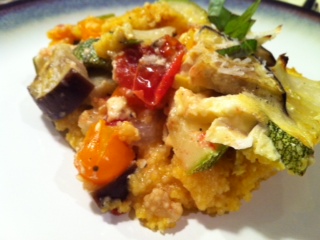
Polenta Pie with Roasted Vegetables

My very good friend Lily is incredibly smart. In fact, she is currently taking the bar exam, which I'm sure she will ace after three successful years of law school. In addition to being smart and motivated and all that, Lily is also a great cook. Clearly more interesting than her law skills in my opinion and, fortunately for us foodies, also something she finds worth exploring and expanding even in the midst of studying for said bar exam. So while most law students hunker down and don't leave the library until the bar exam is over, Lily decided to start a food blog, appropriately named Bar Food. So while she was presumably doing a lot of studying, she was also exploring a whole list of food tasks that she's been meaning to tackle. One should eat while studying anyway so why not make it an enjoyable learning experience at the same time? Seems reasonable to me and the result is a very funny blog full of good food tips and fun recipe ideas.
Lily and I often talk about food and different things we like to make or want to try making. One food we've discussed often is the delightful dish of polenta. It's so versatile and easy and absolutely delicious. A recent recipe on her blog was for a vegetable pie with a polenta crust, something that both looked delicious and fit into my need for gluten free delights. So I decided I had to make it using up all of the delicious produce available at the farmers' market. Our versions are slightly different based on what we each had available. But give it a try with whatever you have on hand. It's easy to make and tastes amazing. I only wish I had had some goat cheese to melt on the top like she did...next time!
Polenta Pie with Roasted Vegetables
  • 1/2 onion, thinly sliced
  • 1 large zucchini and 1 yellow squash, sliced into thin half moons
  • 1 eggplant, peeled and sliced
  • 1 pint cherry tomatoes, halved
  • 1 tbsp + olive oil
  • Salt and pepper
  • 1 cup polenta
  • 3 cups water or vegetable/chicken stock
  • 2 eggs
  • 1/3 cup milk
  • 1/4 cup Parmesan cheese, plus more for garnish
  • 2 tbsp fresh basil, thinly sliced
Preheat oven to 450*F.
Toss onions, zucchini, squash, eggplant and tomatoes with enough olive oil to lightly coat and season well with salt and pepper.
Arrange vegetables in an even layer on a large baking sheet.
In a small saucepan, bring stock to a boil with a pinch of salt.
Turn heat to low and slowly pour in polenta, stirring thoroughly to avoid any lumps.
Continue cooking, stirring frequently, for about 5-8 minutes, until polenta is thick.
Spread cooked polenta into a lightly greased (vegetable spray works) pie pan, making it as even as possible.
Put both the vegetables and the polenta pie into the oven and cook for about 10-15 minutes, until vegetables are tender and the polenta begins to get golden on the edges.
Meanwhile, mix together eggs, milk and Parmesan cheese. Season with black pepper.
Remove polenta and vegetables and layer as many of the vegetables into the polenta pie as you can fit, pressing down the polenta as you go.
Turn the oven down to 375*F.
Pour the egg mixture over the vegetables, pressing with the back of a spoon to get it to soak in.
Place the veggie pie back into the oven and cook for 25 to 30 minutes, until the eggs are set.
Garnish with fresh basil and more Parmesan cheese.
Let the pie rest for a bit before cutting to let it set. I was too impatient for this and mine fell apart a bit. Still delicious though!

For a printable recipe click here

Sunday, July 3, 2011

Summer Vegetable Ratatouille with Feta

I've written about this type of dish before but it's just too good to not include this version of it on my blog. And besides, it's been awhile since we've had an abundance of summer produce available so it's time to start thinking about these great vegetables dishes again. The farmers' market is full of different types of squash: zucchini, yellow squash, Lebanese, patty pan and eggplant (not really a squash, but you get my point). Not to mention bright red tomatoes waiting to burst they're so juicy. So with these incredibly fresh ingredients at the ready, there are tons of delicious dishes just begging to be made. One of my favorites is a ratatouille type dish, served over gluten free pasta (or regular if you can eat it of course), topped with cheese. For this version, I went with feta, a change up over the usual Parmesan or other similar cheese but equally delicious. I chose feta because that is what Chapel Hill Creamery had at the time I went to the market. But I think it was just a cosmic push to include this wonderfully salty, briny cheese into my dish to add a whole new level of flavor that just wouldn't have come from anywhere else. Although the vegetables are incredible on their own, sauteed in a bit of olive oil with garlic, salt and pepper, I added a few things to create something new and add to the overall yumminess of the dish. The red wine vinegar adds a brightness to the dish while the sugar brings out the sweetness in the tomatoes. Finished off with some fresh basil and a bit more feta cheese and you've got yourself quite a meal.

Summer Vegetable Ratatouille with Feta

  • 1-2 tbsp olive oil
  • 3 cloves garlic, smashed and peeled
  • 2 zucchini, chopped into small cubes
  • 1 yellow squash, chopped
  • 1 large eggplant, peeled and cubed
  • 4-5 plum tomatoes, chopped
  • 2 tbsp tomato paste
  • 2 tbsp red wine vinegar
  • 1 tsp dried thyme, or 2-3 tsp fresh
  • 1 tsp sugar
  • 1 tsp salt, or to taste
  • 1/2 tsp black pepper, or to taste
  • 3 oz feta cheese, crumbled, plus more for garnish
  • 2 tbsp fresh basil, chopped
Heat oil in a large skillet, preferably with straight sides, over medium heat.
Add garlic cloves, zucchini and yellow squash, season with a pinch of salt and pepper; saute for a few minutes.
Add eggplant and tomato, stirring to combine. Cook until vegetables begin to soften, about 5-8 minutes.
Stir in tomato paste, red wine vinegar, thyme and sugar. Season with a bit more salt and pepper.
Simmer sauce for about 8-10 minutes until all of the flavors are well combined and the vegetables are tender.
Remove from heat and stir in crumbled feta and fresh basil. Check seasoning and add more salt or pepper if needed.
Serve sauce over cooked pasta or rice and garnish with a bit more feta cheese.

For a printable recipe click here

Monday, May 16, 2011

Goat Cheese Smashed Potatoes with Spring Veggies

I must admit that I have been less than inspired by my cooking recently. It's not that I haven't been cooking or that it hasn't tasted good, I've just been relying on things I'm comfortable with or variations of things I've made many times before. And while it provides nourishment for me and my hubby, these meals have not compelled me to write about them and share them with you. This meal, however, was an exception. It started with a trip to the Durham Farmers' Market, which is always cause for some cooking inspiration, especially as we move into new and exciting spring produce. As usual, I didn't enter the market with much of a plan, hoping to find some products that would work well together and create a simple, seasonal meal. I ended up with some great little red-skinned potatoes, Lebanese squash (a cross between zucchini and yellow squash), shiitake mushrooms, and red pepper goat cheese. Armed with these fresh items, I headed home to come up with something to make.
Since potatoes and cheese are a match made in heaven, I decided to start with smashed red potatoes seasoned with the flavored goat cheese. The red pepper added a touch of sweetness while the fresh goat cheese made the potatoes nice and tangy. I like my potatoes to have some texture, so I left the skin on and simply mashed them with a fork for an uneven consistency. I then sauteed the squash and mushrooms, added some sun-dried tomatoes and white beans, and finished it off with a splash of red wine vinegar. The whole meal took less than 30 minutes to make and tasted fresh, healthy and exciting. It's also a great meal to try if you want to eat less meat. The beans and goat cheese add protein and make the dish satisfying enough that you won't miss the meat. Hopefully this meal, and the season's great produce, will inspire you to make something new and bring some excitement back to the dinner table.

Goat Cheese Smashed Potatoes with Spring Vegetables (serves 2, with leftovers)

  • 1 lbs. red-skinned new potatoes, halved if large
  • 4 oz fresh goat cheese, flavored if desired
  • 1 tbsp butter
  • 1/4 cup milk (if needed)
  • 1 tbsp olive oil
  • 2-3 large garlic cloves, smashed and peeled
  • 4 oz shiitake mushrooms, stems removed and sliced
  • 2 medium Lebanese squash (or zucchini), chopped
  • 1/2 cup sun-dried tomatoes, chopped small
  • 1 15oz can white beans, drained and rinsed
  • 1-2 tbsp red wine vinegar
  • Salt and black pepper
Put the washed potatoes into a small saucepan and cover with cold water.
Cover the pan and bring to a boil over high heat.
Once boiling, season water with a generous (1 tsp +) pinch of salt and boil potatoes uncovered until tender, about 12-15 minutes.
Drain potatoes and return to hot pan.
Stir in goat cheese and butter, mashing potatoes with a fork or potato masher.
Add milk if needed to make potatoes easier to mix.

While potatoes are boiling, heat oil in a large saute pan.
Add garlic and saute for a minute.
Add mushrooms and cook until mostly browned, about 4-5 minutes.
Add squash and season with salt (1/2 tsp or so) and pepper (1/4 tsp or so).
Saute for about 8 minutes, until squash is nearly tender.
Add in sun-dried tomatoes, white beans and vinegar, cooking for another couple of minutes to heat through.
Season with more salt and pepper if needed.

Serve vegetables over mashed potatoes and enjoy!

For a printable recipe click here

Tuesday, January 11, 2011

Asparagus and Herb Pesto Pasta

Some days, in the middle of winter, when I feel like there is no end in sight, I crave the fresh, light tastes of summer. Sure by the end of August or September, I start to get tired of zucchini, yellow squash, and asparagus every night of the week. I look forward to the earthy, heartier root vegetables available in fall and winter. And don't get me wrong, I still love those vegetables and all of the comfort they bring during the cold winter months. But there are times in the winter when I want a taste of something green and fresh. Something that reminds me of the warm spring and summer months.
This simple pasta dish is full of bright, fresh tastes and colors. The sweetness of the peas and the slight crunch of the asparagus goes perfectly with the fresh herbs in the creamy pesto and the salty feta cheese. Everything cooks in one large pot of boiling water and the pesto whips up in no time in a food processor or blender. I will definitely be making this again when asparagus really is in season come early summertime. But for now, I will take a little help from the grocery store to invoke those flavors of warm weather and long days.

Side note: I realize when I write, I sound like I must live in Alaska or the frozen tundra, but no, I just live in NC where our winters are quite mild. However, I strongly detest cold weather and therefore blow any amount of coldness way out of proportion. Just wanted you to know that I am aware of this personal trait. :)

Asparagus and Herb Pesto Pasta (2 dinner servings, or 4 side dish servings)

  • 1 bunch asparagus, ends trimmed, cut into 2 inch pieces
  • 1 cup green peas (frozen is fine)
  • 8 oz pasta
  • 1 bunch fresh basil, about 1.5-2 cups loosely packed
  • 1 bunch fresh mint, about 1 cup
  • 3/4 cup feta cheese
  • 1/3 cup olive oil
  • Salt and pepper
Bring a large pot of water to a boil. Season with about 1 tbsp salt.
Boil asparagus for 4-6 minutes, until crisp tender. After 2 minutes, add peas. Remove vegetables with a slotted spoon and put into a large bowl.
Return water to a boil and add pasta. Cook until al dente, according to package directions. Drain pasta, reserving 1 cup of pasta water. Add pasta to vegetables.
While pasta is cooking, Combine basil, mint and feta in a food processor or blender. Pulse to combine.
Stream in about 1/3 cup olive oil to make a thick paste. Season with a pinch of salt and pepper. Feta is quite salty on its own, so only a little is needed.
Toss pasta and vegetables in pesto sauce, using a splash of pasta water if too thick. Check seasoning.
Garnish with remaining feta cheese.

For a printable recipe click here
Adapted from Epicurious.com

Friday, December 10, 2010

Curried Cauliflower and Chickpeas

Cauliflower is in season and looks beautiful at the farmers' market. I often forget about this delicious vegetable and pass it by for its greener, more popular cousin, broccoli. But it definitely deserves its own merit and this dish gives it the credit its due. There's a great curried cauliflower dish on the Whole Foods salad bar that I love and cauliflower is often used in Indian cooking. This dish uses some of those flavors but, most importantly in my book, can be made with ingredients you probably have on hand. One of the most difficult things about cooking Indian-inspired food is the number of spices used in each dish. This combination of spices makes for delicious meals, but can be intimidating if you don't have all of the spices on hand.

This dish uses spices that, if you don't have them already, are a great addition to your spice cabinet as they can be used in all sorts of meals. Curry powder is great because it is a bunch of different spices already mixed together. That way you get a nice depth of flavor without having to spend a lot of money on different spices. Cumin, coriander, and cayenne are all useful spices to have on hand as they add a lot of flavor to meats, stews, chili, the list goes on. This dish is an adaptation from The Inspired Chef and tastes great served over brown rice. I had a large head of cauliflower (and most from the grocery store are pretty big) so this recipe makes enough for about six to eight people. If you want to make less, just use half a head of cauliflower and cut back on the other ingredients.

Curried Cauliflower and Chickpeas (Serves 6-8)
  • 1 tbsp olive oil
  • 1 small onion, chopped
  • 1 tsp ground coriander
  • 1 tsp cumin
  • 2 tbsp curry powder
  • 1/4 tsp cayenne pepper (more or less to taste)
  • 1 inch fresh ginger, peeled and minced
  • 28 oz can plum tomatoes
  • 1 head of cauliflower, cut into florets
  • 2 14 oz cans chickpeas, drained and rinsed
  • 2 tbsp tomato paste
  • 1 bunch swish chard, stems removed and chopped into pieces
  • Salt and pepper
In a large soup pot, heat olive oil over medium heat.
Add onion, spices and ginger. Season with about 1/2 tsp salt and 1/4 tsp pepper.
Saute until onion is tender and spices are fragrant, about 5 minutes.
Add in plum tomatoes, breaking them up with a spoon. Cook another 5 minutes.
Add cauliflower, chickpeas, tomato paste and 1 cup of water.
Bring to a simmer and cover, cooking for about 25-30 minutes, until cauliflower is tender.
Remove lid and stir in Swiss chard pieces. Cook long enough for chard to wilt and the sauce to thicken, another 5-8 minutes.
Season with a bit more salt and pepper to taste.

For a printable recipe click here

Friday, November 5, 2010

Spaghetti Squash with Tomato Spinach Sauce

I'm coming down with a cold and it seems like I'm not the only one. Hopefully it will stay at just a cold and not turn into a full blown flu, like my friend suffered this week. I hate being stopped dead in my tracks, unable to get up off the couch, feeling like I'll never be able to breathe properly again. You know the feeling. As much as I love fall, the change of seasons always gets to me. Between the recent rain and the temperature being anywhere from 80˚ to 40˚, my body isn't sure what to think so I inevitably end up with a cold. But not to worry, I used my cold as an excuse to curl up on my couch with lots of hot tea and caught up on my DVR. So it's not necessarily a bad thing to get a bit of a cold, as long as it doesn't get any worse.
One thing that always works great when you have a cold, or it's just cold outside, is hot comfort food. A big bowl of pasta with a hearty tomato sauce is always an incredibly comforting dish. I realize spaghetti squash does not replace regular pasta, but topped with tomato sauce, it's a great way to enjoy winter squash and is a lot lighter than pasta. When cooked, spaghetti squash creates thin strands, like spaghetti, and is mild enough to be served with any favorite sauce. I made a simple tomato and spinach sauce and topped the whole thing with Parmesan cheese. Warm, comforting, and super healthy, this meal is great for any cold night of the week.

Spaghetti Squash with Tomato Spinach Sauce
  • 1 medium spaghetti squash, cut in half, seeds removed
  • 1 tbsp olive oil
  • 1 shallot, diced
  • 2-3 garlic cloves, smashed and peeled
  • 5 oz baby spinach, or 1 large bag
  • 3-4 sprigs fresh thyme
  • 1 tsp dried oregano
  • 1/2 tsp dried basil
  • 1/4 tsp crushed red pepper flakes
  • 2 cans diced tomatoes
  • Salt and pepper
  • Parmesan cheese
Preheat oven to 450˚F. Place squash halves, cut side down, on a baking sheet.
Roast for 25-30 minutes, until fork tender.
Heat olive oil in a large pan over medium heat.
Add shallots and garlic cloves. Saute until fragrant, about 5 minutes.
Place spinach in a microwave safe dish and cover with plastic wrap. Microwave for 3 minutes.
Stir spinach and press out as much water as possible with a clean towel or paper towels. Set aside.
Add herbs and spices to shallots and stir to combine.
Stir in both cans of tomatoes and season with about 1/2 tsp salt and 1/4 tsp pepper.
Simmer sauce until thickened, about 10-15 minutes.
Stir in spinach and heat through. Taste and season with more salt and pepper if needed.
Allow cooked squash to cool a bit before taking a fork to pull out all of the spaghetti-like strands.
Season squash with salt and pepper, top with tomato sauce and garnish with Parmesan cheese.

For a printable recipe click here
 

Monday, November 1, 2010

Balsamic Beets and Greens over Pesto Quinoa

There's something really nice about Sunday evenings. I know a lot of people sort of dread Sunday night since it means the weekend is coming to an end and another week is just around the corner. Right now I don't get up to go to work on Monday mornings, so that probably helps in my enjoyment of Sunday evenings. But even when I was working a 9 to 5 job, I still liked the quiet and calm of a Sunday evening. Rarely does anyone make plans since most people do have to get up for work or school. That means it's an evening reserved for just me and my hubs. It also usually begins my cooking week since I tend to take Friday and/or Saturday nights off. I need the break and look forward to going out to eat a meal that someone else came up with, prepared and cleaned up afterward. But by Sunday, I'm ready to get cooking again and look forward to a fresh week of making new things and old favorites.
This Sunday's dinner was a combination of some favorite flavors, but made in a new way. I've made roasted beets plenty of times and love to pair them with goat cheese. The sweetness of the beets goes perfectly with the tangy goat cheese. They are great over arugula in a simple salad but this week I wanted to do something different. I decided to roast the beets and saute the beet greens and then combine them with the sweet flavor of balsamic vinegar. Instead of serving the beets over arugula for a salad, I used the arugula pesto left over from our grilled cheese sandwiches stirred into quinoa. The pesto melted in the cooked quinoa and gave it a new flavor that went great with the balsamic beets. I topped the whole thing with some crumbled goat cheese to add another layer of flavor and texture. Even though the meal is vegetarian, you won't miss the meat with such hearty flavors and the quinoa is a great source of protein on its own.

Balsamic Beets and Greens over Pesto Quinoa (Serves 2)
  • 3-4 large red beets, greens included (or 5-6 small)
  • 1 cup quinoa
  • 2 cups water
  • 1 tbsp olive oil
  • 1 large shallot, thinly sliced (or 1 small onion)
  • 1 clove garlic, minced
  • 2 tbsp balsamic vinegar, divided
  • 1/2 cup arugula pesto (or your favorite pesto)
  • Salt and pepper
  • 2 oz goat cheese
Preheat oven to 425F.
Trim beets, leaving about two inches of stem; set greens aside. Wash off any dirt.
Wrap beets in tinfoil and place on a baking sheet. Roast for 45-60 minutes, until fork tender. Remove from oven and let cool before trimming ends and removing skin. Cut into 1/2 inch wedges. (Can be done ahead. Keep in a sealed container in refrigerator until ready for use.)
Remove the red stems from the beet greens and cut the leaves into 1 inch wide strips. Wash well and dry.
Bring quinoa and water, with a pinch of salt, to a boil in a medium saucepan.
Cover and simmer over low for 10-15 minutes, until liquid is absorbed.
Meanwhile, heat olive oil in a large saute pan.
Saute sliced shallots until they begin to soften, about 5 minutes. Add 1 tbsp balsamic vinegar and a pinch of salt and pepper. Continue cooking for another couple of minutes, then add garlic.
Add beet greens and toss together. Cook until greens are wilted, about 5 minutes.
Toss in roasted beets and remaining tbsp balsamic vinegar. Cook to heat through. Season with salt and pepper.
Stir pesto into cooked quinoa. Season with salt and pepper if needed.
Spoon quinoa into bowls and top with roasted beets and greens. Crumble goat cheese on top.

For a printable recipe click here


Balsamic Beets and Greens Over Pesto Quinoa

Monday, August 16, 2010

Israeli Couscous with Snap Peas and Asparagus


I love dishes that mix great ingredients into one bowl to be served together. This works especially well when combining grains with vegetables for a side dish. Although I'm a huge fan of carbs, especially healthy whole grain ones, adding vegetables to a grain can significantly lighten a dish and add a lot of nutritional value. It also makes serving a delicious side dish that much easier. This dish is my adaptation of a recipe from Epicurious and it combines a unique grain--Israeli couscous--with healthy snap peas and asparagus for both flavor and texture. The lemon dressing and Parmesan cheese ties everything together and makes it worthy enough to be served on its own as a simple lunch as well. Israeli couscous is a wheat-based baked pasta, similar to the rice shaped pasta known as orzo. If you can't find Israeli couscous, regular couscous, orzo or any small pasta would work really well too. But I found it to be a nice change and a delicious soft counterpoint to the slight crispness of the snap peas and asparagus.

Israeli Couscous with Snap Peas and Asparagus
  • 4 tbsp olive oil, divided
  • 3 tbsp lemon juice
  • 1 1/2 tsp grated lemon zest
  • 1 cup Israeli couscous
  • 1 1/4 chicken or vegetable stock
  • 1 bunch thin asparagus, trimmed
  • 6-8 oz snap peas, about 2 cups
  • 1 clove garlic, minced
  • Salt and pepper
  • 1/3 cup Parmesan cheese, plus more for garnish
Whisk together 3 tbsp of olive oil with lemon juice and lemon zest. Set aside.
Heat about 1/2 tbsp olive oil in a sauce pan over medium heat.
Add the Israeli couscous and a pinch of salt. Saute until lightly browned and fragrant.
Stir in the chicken stock and bring to a boil.
Turn the heat to low, cover and simmer for about 8-10 minutes, until the liquid is absorbed and the couscous is tender.
Meanwhile, heat the remaining 1/2 tbsp of olive oil in a large saute pan.
Add the snap peas and minced garlic and cooked for a couple of minutes.
Cut the asparagus into 1-2 inch pieces and add to the saute pan.
Season with salt and pepper and saute until crisp-tender, about 8 minutes.
Place the cooked vegetables into a large bowl. Add the couscous, lemon dressing and Parmesan cheese. Toss to combine.
Check the seasoning and serve garnished with a sprinkle of Parmesan cheese.
Can be served warm or at room temperature.

For a printable recipe click here

Sunday, August 15, 2010

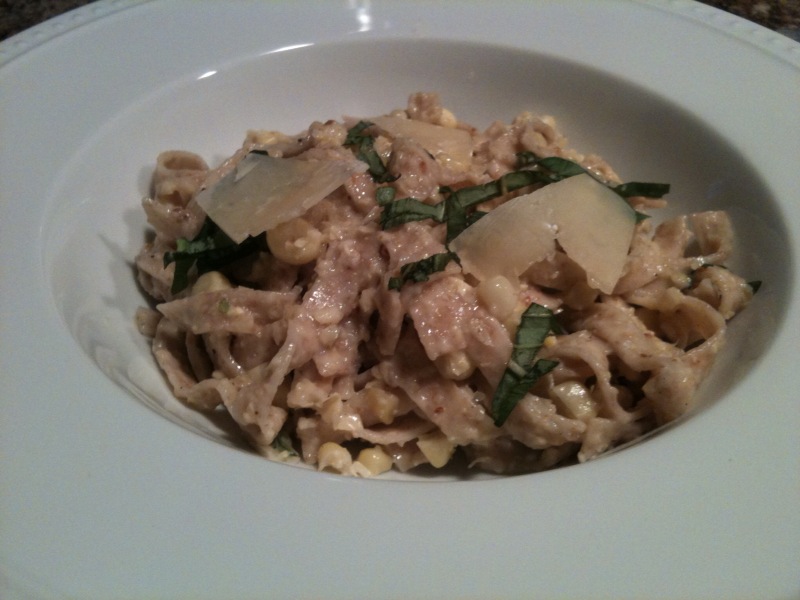
Pasta with Fresh Corn Pesto

Pesto is generally a pureed mixture of basil, Parmesan, pine nuts and olive oil. It's a delicious sauce that can be spread on sandwiches, used as pizza sauce, or tossed with pasta. Another great thing about pesto is that the method can be adopted to use a number of different ingredients, each making a unique pesto sauce that can be used with all sorts of dishes. I have had pesto made with mint, with asparagus, and even with red bell peppers. This dish, however, was the the first time I had tried, or even heard of, pesto made with fresh corn. I love corn on the cob during the summer when it's in season. Nothing can compare with the sweetness of good corn and it's sadly only available for a few short months. Although I could just eat it all the time on the grill, I loved looking through the section in a recent Bon Appetit Magazine dedicated to recipes featuring fresh corn. This corn pesto looked the most interesting and was definitely a unique way to use the fresh ingredient. The pesto was so thick and creamy that the pasta tasted almost like an Alfredo dish but without the fat of a lot of cream. It was amazing how rich a dish made almost entirely of vegetables could taste. I served this pasta as a main dish with just a simple side salad or it would be great as a side dish with grilled chicken or steak. August is peak season for fresh corn, so get some while it's still at its best.

Pasta with Fresh Corn Pesto
  • 4 cups fresh corn kernels (from about 4 large ears of corn; see tip below for technique)
  • 1 garlic clove, minced
  • 1/2 cup grated Parmesan cheese, plus some for garnish
  • 1/3 cup pine nuts, toasted
  • 1/3 cup extra virgin olive oil, plus 1 tbsp
  • Salt and pepper
  • 8 oz thick cut pasta, such as fettuccine
  • 3/4 cup fresh basil, coarsely chopped
Heat 1 tbsp olive oil in a large skillet over medium heat.
Add corn, garlic, about 1 tsp salt and 1/2 tsp black pepper.
Saute until corn is tender but not brown, 3-4 minutes.
Reserve about 1 1/2 cup of corn mixture in a small bowl.
Place the remaining corn mixture into a food processor.
Add Parmesan and pine nuts and puree to combine.
With machine running, add in olive oil and blend until pesto is almost smooth. Set aside.
Cook pasta in a large pot of salted, boiling water until just tender.
Reserve about 1 1/2 cups of the pasta water and drain pasta.
Return pasta to the pot and combine with corn pesto, reserved corn kernels and 1/2 cup basil leaves.
Toss over medium heat, adding pasta water by 1/4 cupfuls to thin out the pesto.
Cook until warmed through and of the desired consistency.
Season to taste with salt and pepper.
Serve pasta garnished with fresh basil and a sprinkle of Parmesan cheese.

Technique Tip: To remove the kernels from an ear of corn, place a small bowl upside down in a larger bowl. Peel the corn, removing all of the strings. Cut the ear in half to make it easier to work with. Place one flat end of the corn on top of the small bowl. Run your knife from top to bottom of the ear, allowing the kernels to collect in the larger bowl; repeat on all sides with each ear of corn.


For a printable recipe click here.

Wednesday, August 4, 2010

Zucchini Ribbon Salad

I've written numerous times about dishes that include zucchini and other summer squash. They've been so beautiful at the farmers' market and grocery store, that I keep buying them and coming up with new combinations so we aren't always eating exactly the same thing. Generally, I only like zucchini when it's cooked, but not at all when served raw such as on a veggie and dip platter. However, I was intrigued by yet another recipe in Bon Appetit magazine that uses thin slices of zucchini "ribbons" combined with Parmesan cheese and pine nuts. My love of those two ingredients helped me push past my usual distaste of raw zucchini and prompted me to give this salad a try. Am I ever glad I did! The zucchini is sliced so thinly and then dressed with a delicious mix of lemon juice and olive oil, that it tastes nothing like the bland sticks of raw zucchini found on most veggie platters. To make the thin ribbons of zucchini, I used a regular old vegetable peeler but a mandoline would have also worked wonderfully if you happen to have one. Because I used a vegetable peeler, I found that it was easiest to make ribbons out of about 3/4 of the zucchini, leaving the remaining 1/4 for something to hold on to. I used the leftover thick piece of zucchini chopped up into a stirfry. A mandoline would allow you to slice the entire thing in to ribbons but either system works. This makes a delicious, light salad as a starter or even as a simple lunch with some leftover chicken.

Zucchini Ribbon Salad
  • 1/3 cup extra-virgin olive oil (always use good oil for salad dressings)
  • 2 tablespoons fresh lemon juice, about 1 large lemon
  • 1/4 tsp dried crushed red pepper flakes
  • Salt and pepper
  • 5-6 medium zucchini
  • 1/2 cup fresh basil, chopped
  • 1/4 cup pine nuts, toasted
  • Small wedge of Parmesan cheese
Whisk together olive oil, lemon juice and crushed red pepper. Season with a generous pinch of salt and black pepper. Set aside.
Slice the ends off of the zucchini and peel long ribbons from top to bottom with a vegetable peeler or mandoline. You want about 4 cups + of ribbons.
Toss the zucchini ribbons with basil, pine nuts and most of the dressing. Add more dressing if desired.
Season with a bit more salt and pepper if needed.
Plate and shave strips of Parmesan cheese over the top or sprinkle with grated Parmesan.

For a printable recipe click here

Monday, August 2, 2010

Ricotta Gnocchi with Spinach and Mushroom Tomato Sauce

Gnocchi are delicious little "lumps" of dough, usually made from a mixture of flour and potatoes and served with any type of sauce.  Different varieties of gnocchi have been made in Italy for centuries. Gnocchi can be found frozen or vacuum sealed at most grocery stores but they are also incredibly easy to make at home and infinitely better that way. Because they are free-formed dumplings, they are much easier to make than homemade pasta since there's no rolling to be done. And looks are not as important as taste (as can be seen by my less-than-perfect looking gnocchi). This particular version of gnocchi is made with ricotta cheese as the base, making them incredibly creamy and delicious. When topped with tomato sauce, this dish is reminiscent of lasagna but lacks the many steps involved in making a traditional lasagna. The sauce is a delicious combination of fresh mushrooms, spinach and tomatoes but any sauce would be great over these gnocchi. The tomatoes pair really well with the ricotta but a pesto or butter sauce would also work. I came across this gnocchi recipe while browsing headlines on Foodblogs.com from the blog Houseboat Eats. The sauce I came up with on my own and could easily be modified based on what you have on hand. I would have much preferred to use fresh basil and thyme, but unfortunately I only had dried. If you have fresh, leave out the dried and add about 1 tablespoon of basil and a couple of sprigs of fresh thyme toward the end of the cooking process.


Ricotta Gnocchi
  • 1 15 oz container part-skim ricotta cheese
  • 1 egg yolk
  • 1/2 cup All-Purpose flour
  • 3 tablespoon Parmesan cheese
  • Salt and pepper
In a large bowl, combine the ricotta cheese and egg yolk. Stir to incorporate yolk and remove any lumps from the ricotta.
Fold in the flour and Parmesan cheese. Mix until just combined. Avoid overmixing to keep the dough light. If the dough is too sticky, add a bit more flour.
Season with salt and pepper.
Roll the dough into logs about 1 inch thick. Cut the logs into 1.5 inch dumplings.
Place the dumplings on a floured baking sheet and refrigerate for one hour.
Bring a large pot of water to a boil and cook half of the gnocchi for about 2 minutes. They will begin to float when done. Remove with a slotted spoon and cook the remaining batch.


Spinach and Mushroom Tomato Sauce
  • 5 oz (1 large bag) baby spinach, washed
  • 1 tbsp olive oil
  • 1 small shallot, diced
  • 3 garlic cloves, crushed and peeled
  • 6 oz (or so) sliced mushrooms, any variety
  • 1 15 oz can petite diced tomatoes
  • 1 8 oz can tomato sauce
  • 1 tsp dried basil
  • 1/2 tsp dried oregano
  • 1/4 tsp dried thyme
  • Salt and pepper
  • Parmesan cheese
Bring a large pot of water to a boil. Cook half of the spinach by fully submerging it in the water for about 30 seconds. Remove with a slotted spoon and put into a colander. Repeat with the remaining spinach. Let the spinach drain, pushing out as much water as possible, while making the sauce.
Heat oil in a large pan over medium heat.
Add shallots and garlic and cook until fragrant, 2-3 minutes.
Add mushrooms and cook until browned, 8-10 minutes.
Season with a pinch of salt to release any remaining moisture in the mushrooms.
Add both cans of tomatoes. Season with basil, oregano, thyme, salt and pepper.
Simmer for about 10-15 minutes, until sauce begins to thicken.
Stir in the drained spinach and adjust seasonings.
Spoon sauce over cooked gnocchi and sprinkle with Parmesan cheese.

For a printable recipe click here

Tuesday, July 27, 2010

Cucumber Gazpacho

Recently my mom was given a full bag of beautiful garden grown cucumbers. Unfortunately, my mom does not like cucumbers so there was no way she could use them all even if she just fed them to my dad. Lucky for me, she handed the bag over to me to come up with some creative way to use all of those cucumbers. Although I like cucumbers in salads and mixed with tomatoes and feta, I didn't think I could use them all that way before they started to go bad or I started getting sick of them. So instead, I decided to make a cold cucumber soup of sorts. I love all different types of gazpacho, which are cold soups generally based around tomatoes. After a quick search on Epicurious, I found a recipe that I liked enough to use as a base and went from there.


To be honest, I didn't have very high hopes for this soup as I was making it. I don't have a food processor or blender (I'm holding out for a possible wedding present!), which would have made this much easier. Instead I used an immersion blender, causing a fair amount of splatter. I was also afraid there wouldn't be enough flavor since cucumbers are pretty mellow on their own. However, the cool and creamy soup was absolutely delicious and was made even better by the sweetness of the shrimp on top and the crunch of the cucumbers left out of the pureeing process. Cold soups are especially wonderful when it's so hot outside and the thought of cooking over a hot stove and then eating a hot meal sounds less than pleasant. I served this soup as an appetizer but with some bread and maybe a tossed salad, this could also serve as a meal. This recipe makes only about 2.5 to 3 cups of soup so plan accordingly.

Cucumber Gazpacho
  • 6-8 small cucumbers or 2-3 large
  • 3/4 cup, loosely packed fresh herbs (I used basil and mint)
  • 1 small garlic clove, minced
  • 1/2 inch piece of ginger, peeled and chopped
  • 3 tbsp olive oil
  • 1/3 cup low-fat plain yogurt
  • Salt and pepper
  • Hot sauce
  • 1/4 pound shrimp, peeled and deveined
Remove the peel and seeds from the cucumbers. To easily remove the seeds, cut the cucumbers into quarters lengthwise, then cut into each quarter on a diagonal.
Small dice about 1/4 cup of the cucumber and set aside. Roughly chop the rest, about 3.5 cups.
Separate 1/4 cup of herbs and finely dice. Add to the reserved cucumber.
Combine the chopped cucumber, 1/2 cup herbs, garlic, ginger, olive oil and yogurt in a food processor or blender. Blend until smooth.
Season with about 1/2 tsp salt, 1/4 tsp black pepper and a few dashes of hot sauce.
Pour into an airtight container and refrigerate for at least one hour.
Bring a pot of water to a boil. Cook the shrimp for about 1 minute, until pink throughout. Remove and let cool.
Chop the cooled shrimp into small pieces and combine with reserved cucumber and herbs. Season with a pinch of salt and black pepper.
Adjust the seasoning in the soup and ladle into individual bowls. Top each with a small mound of the shrimp and cucumber mixture.

For a printable recipe click here

Friday, July 23, 2010

Miso Soba Noodles

I've spent the last few days gluing, stuffing, stamping and sorting my wedding invitations so I haven't had much time to write. Fortunately they are done (and look beautiful!) and have been mailed off. With that out of the way, I have a few days to catch up on writing and some tv shows, like Top Chef, before the next wedding project gets under way. I hadn't realized how many details and decisions go in to planning a wedding! But it's all fun and I'm very excited. :)

So anyway, I promised in my last post to write about the soba noodles that I made with the Miso Steak, using the same dressing. I loved the way the dressing coated the noodles and gave a ton of flavor to the mushrooms and snap peas. The miso and ginger also mellowed out a bit when cooked as opposed to the tangy flavors of the salad. The two dishes go great together or this noodle dish would also work on its own or with some shrimp tossed in with the stir-fried vegetables. Soba noodles can be found in the Asian section of most supermarkets but any pasta would work. I love the nutty taste of buckwheat in the soba noodles and they only take about 3-4 minutes to cook, which is always appreciated.

Miso Soba Noodles
  • 8 oz soba noodles
  • 1 tbsp vegetable oil
  • 4-6 oz assorted mushrooms, sliced
  • 8 oz (or about 2 cups) snap peas, trimmed
  • 6-8 tbsp miso dressing
  • 1/2 cup water, from pasta pot
Boil a large pot of water and cook the soba noodles about 3-4 minutes. Reserve some of the starchy pasta water to thin out the dressing.
Heat oil in a large skillet over medium heat.
Saute the mushrooms until they begin to brown, about 5-8 minutes.
Add the snap peas and 3 tbsp miso dressing.
Pour in about 1/3 cup pasta water and stir to combine.
Cook the vegetables until the snap peas are crisp tender, about 10 minutes. Add more water if the pan becomes dry.
Toss the noodles in with the vegetables, adding more dressing to coat the noodles.
Remove from heat as soon as everything is combined and warmed through.

For a printable recipe click here

Friday, July 16, 2010

Roasted Summer Vegetables with Quinoa and Feta

I did that thing again where I went to the farmers' market and bought everything in sight because it all looked so delicious. Then I had to figure out what to do with it all once I got home. Rather than sauteing the mixed vegetables, I decided to roast them. I always roast winter vegetables (sweet potatoes, turnips, Brussels sprouts) since they tend to be denser and do well with the high temperatures of roasting. Although lighter than winter vegetables, summer vegetables also taste great when roasted and just need less time, which is great for a summertime meal. The roasted vegetables are full of flavor on their own but are transformed when tossed with quinoa, feta and red wine vinegar. The quinoa and feta both add enough protein to make this vegetarian dish healthy and substantial enough to be a full meal. It would also work as a side dish alongside any grilled fish, chicken or meat.


Roasted Summer Vegetables with Quinoa and Feta
  • 1 large eggplant
  • 2 medium zucchini
  • 1 yellow squash
  • 1 pint cherry tomatoes (any color)
  • 3-4 sprigs fresh thyme
  • 2 tbsp olive oil, divided
  • 1 cup quinoa
  • 2 cups vegetable stock
  • 4 oz crumbled feta
  • 2 tbsp red wine vinegar
  • Salt and pepper
Preheat oven to 450F. 
Cut the eggplant, zucchini and yellow squash into 1/4 inch half moons or quarters, making them all about the same size.
Combine sliced vegetables, cherry tomatoes and thyme sprigs in a 9 x 13 in pan.
Toss with 1.5 tbsp olive oil and season with salt and pepper.
Roast the vegetables for about 20 minutes, or until tender, stirring occasionally.
Combine the quinoa with the vegetable stock in a small sauce pan. Bring to a boil; turn the heat to low and simmer for 15 minutes.
In a large bowl, combine the quinoa, roasted vegetables and feta cheese.
Toss together with the remaining 1/2 tbsp olive oil and red wine vinegar. Adjust seasoning if needed.

For a printable recipe click here

Tuesday, June 29, 2010

Summer Vegetable Ratatouille

Occasionally I go a little overboard at the grocery store and especially at the farmers' market. There are just so many things that look delicious that I want to use when cooking. This desire to cook everything in sight sometimes results in way too many things in my refrigerator even though I know I only have a couple of nights of cooking at home before they'll go bad. Although I cook most nights during the week, there are those occasions when we go out or know that we will be doing something else for dinner. And weekends usually find us at Lake Hyco, which means either Mexican food in Roxboro or picking something up on the way home. This ratatouille was a direct result of having a lot of produce that I needed to cook in one night. Fortunately the flavors came together to create a really great vegetable "stew." Served over couscous or rice and topped with some feta cheese, this would make for a great vegetarian meal on its own. Or it could be served as a hearty side dish with a simple baked chicken or fish. If you find yourself with lots of vegetables that might end up going bad, try combining them instead of giving in and throwing them out. This dish can easily be tweaked to incorporate different vegetables, just add quicker cooking vegetables after the harder vegetables that need more time.

Summer Vegetable Ratatouille
  • 1 tbsp olive oil
  • 3-4 garlic cloves, crushed and peeled
  • 1 small fennel bulb, trimmed, cored and thinly sliced
  • 1 pint cherry or grape tomatoes, halved
  • 2 medium zucchini, quartered lengthwise and sliced 1/4 inch
  • 3-4 sprigs fresh thyme 
  • 1 tsp dried basil
  • pinch dried red pepper flakes (optional)
  • 1/3 cup dry white wine
  • salt and pepper
Heat the olive oil in a large saute pan over medium heat.
Saute the garlic cloves for a couple of minutes, until fragrant.
Add the sliced fennel, cooking until it starts to become tender, stirring occasionally.
Add the tomatoes; cook a few minutes more.
Add zucchini, thyme, basil and red pepper flakes if desired, stirring to combine. Season with salt and pepper.
Let the vegetables cook down for about 5-8 minutes before adding white wine.
Simmer the vegetables until completely cooked but not dry.
Correct seasonings and remove thyme stems and garlic cloves (optional, some people love the cooked garlic).

For a printable recipe click here

Monday, June 28, 2010

Spiced Eggplant with Yogurt Sauce and Feta

I rarely make a dinner that is completely meat-free. I'll usually include some form of chicken, fish or pork. Although we don't eat a ton of red meat, except at restaurants, I like to include a good source of protein. I do, however, love a lot of vegetarian dishes and vegetable sources of protein. Eggplant is a hearty, meaty vegetable that works well for a main course dish that can stand up on its own without any meat. They are also currently in season for about the next month. This warm, spiced eggplant goes great with the cool and creamy yogurt sauce and salty tang of the feta cheese. I was a little nervous to serve Gavin an entire meal of vegetables but he absolutely loved it. And the whole thing takes only a little over ten minutes. I served it with a mixed vegetable ratatouille over whole wheat couscous (more on that to come) but a simple green salad with crusty bread would also be great. Sometimes meals that require very little cooking heat are perfect for very hot summer nights. The eggplant just needs to be broiled on each side for about five minutes, or you can throw them on the grill over medium to low heat. While they are cooking, you can mix up the yogurt sauce and then plate them in layers of eggplant, sauce and feta.


Spiced Eggplant with Yogurt Sauce and Feta
  • 2 large or 4 small eggplants, sliced into 1/2 in rounds
  • 2 tsp ground coriander
  • 2 tsp paprika
  • 1 tsp ground cumin
  • 1/4 cup olive oil
  • 1 cup nonfat Greek yogurt
  • 1/2 cup diced, peeled cucumber
  • 2 tbsp fresh mint, chopped
  • salt and pepper
  • 3 oz crumbled feta cheese
Preheat the grill or broiler.
Mix together the spices and olive oil. Season with salt and peppper.
Brush the oil mixture onto each side of the sliced eggplant (add more oil if too dry).
Arrange the eggplant in one layer on cookie sheets.
Cook for about 5 minutes per side, until very tender.
Meanwhile, mix together the yogurt, cucumber and mint. Season with salt and pepper.
Plate one or two eggplant slices, top with yogurt sauce and feta, add another one or two eggplant slices and top with more sauce.

This recipe is another adaption from Bon Appetit Magazine
For a printable recipe click here

Friday, June 25, 2010

Greek-Style Quinoa Salad

After making smoked salmon with quinoa salad, all I've wanted to do is cook quinoa. It's so easy, extremely healthy and can be used in any number of ways. Like rice, it can be flavored with just about anything but takes less time to cook than brown rice with more health benefits than white rice. It's pretty much perfect if you ask me. But in the effort to not cook the same thing every night, I held off for awhile before coming up with a different quinoa dish. This Greek-style dish came about because of what I had on hand, left over from a Greek salad I had made earlier in the week. The red wine vinaigrette is easy to mix up and can be used on salads or tossed with cooked vegetables or even to marinate chicken. Home made salad dressings can be intimidating but they are actually quite easy and far superior to the store bought kind. They don't last as long as the bottled versions because they lack all those chemical preservatives but they can easily be made in quantities that you can use up that week. I used a yellow bell pepper that I had but any color will work as would the addition of cucumbers, olives or red onion. Cherry and grape tomatoes are beautiful right now at the farmers' market and at most grocery stores. This salad can be served either warm or at room temperature and as a side dish or even a simple lunch on its own.

Greek-Style Quinoa Salad
  • 1 cup quinoa
  • 2 cups low-sodium chicken stock or water
  • 1 pint cherry tomatoes, halved
  • 1 yellow or red bell pepper, seeded and chopped
  • 1/2 cup crumbled feta
  • 1/3 - 1/2 cup red wine vinaigrette (see below)
  • black pepper
Combine the quinoa and stock/water in a small sauce pot.
Bring to a boil; turn down, cover and simmer for about 15 minutes.
Fluff with a fork and let cool slightly before mixing the quinoa, tomatoes, bell pepper and feta together in a large bowl.
Pour in 1/3 cup vinaigrette and mix thoroughly. Add more vinaigrette if the salad is too dry.
Sprinkle with black pepper.

Red Wine Vinaigrette: (makes about 3/4 cup)
  • 3 tbsp red wine vinegar
  • 1 tbsp dijon mustard
  • 1/2 tbsp honey
  • 1/2 tsp dried oregano
  • 6 tbsp olive oil
  • salt and pepper
Combine vinegar, mustard, honey and oregano and mix well.
Stream in olive oil, whisking to combine.
Season with salt and pepper. Add more honey or oil if the vinegar taste is too strong.

For a printable recipe click here

Thursday, June 24, 2010

Carrot Ginger Soup

As promised in my last post, I will share with you the carrot and ginger soup I made from a recipe I found in Bon Appetit magazine. This incredibly simple soup is surprisingly complex in its layers of flavor with the sweetness of the carrots balanced by the unique spiciness of ginger with just a hint of heat from cayenne pepper at the end. It definitely also benefits from something salty. The magazine recipe calls for chopped peanuts, which would probably taste great. Since I didn't have any peanuts, I left them off but appreciated the saltiness of the focaccia bread dipped into the soup. Although I'm generally more of a fan of soups in the cold winter months, this soup is definitely good enough to make now, despite the heat outside...hopefully you have air conditioning in your kitchen anyway. (If not, I suggest finding somewhere that does!) The soup was included in a spring edition of the magazine because carrots are currently in season. A similar soup made with winter squash (butternut or pumpkin) would be great during the colder months when those are in season.

The most work involved in making this soup is the peeling and chopping of the carrots. If you have a sharp peeler and sharp knife, this shouldn't take too long. Also, don't worry too much about the carrots looking good since they will all be pureed in the end. You want them to all be roughly the same size--the potatoes as well--so that everything cooks evenly. For the ginger, I again recommend a microplane but a box grater would also work. If you don't have either of this kitchen items, mince the ginger as small as possible. Once the vegetables have cooked and are quite tender, you can puree it either in batches in a food processor or with an immersion blender, depending on which you have and which you prefer.

Carrot Ginger Soup
  • 1.5 tbsp butter
  • 1.5 pounds carrots, peeled, sliced into rounds
  • 1 medium to large onion, chopped
  • 1 medium white-skinned potato, peeled and chopped
  • 2.5 tbsp minced peeled fresh ginger
  • 5 cups + low sodium vegetable or chicken broth
  • cayenne pepper
  • salt and black pepper
  • roasted peanuts, chopped (if desired)
Heat the butter in a large soup pot over medium heat.
Add carrots, onion, potato and ginger. Season with a pinch of salt.
Saute until the vegetables start to become tender, but without browning, about 10 minutes.
Add 5 cups of broth and a pinch of cayenne pepper.
Bring to a boil, turn the heat down and simmer for about 20 minutes, or until the vegetables are tender.
Let the soup cool a bit before pureeing it completely.
Return the soup to the heat and add a little more broth to thin it to the desired consistency.
Season with salt and pepper and a bit more cayenne, if desired.

For a printable recipe click here

Monday, June 21, 2010

Snap Peas: An Easy Summer Side

I've mentioned numerous times how much I love warm weather and all of the wonderful things that come with it. Every week there is a larger variety of produce available at the farmers' market and I've loved trying new dishes that utilize the best of what's in season. Fortunately both Gavin and I love summer squash (zucchini, patty pans, yellow squash) since I have bought it at least once or twice a week for the past few weeks. But even though it is delicious, it's nice to switch things up every once in awhile. There are a variety of fresh beans available now; green beans being the most common and popular. Also available are snap peas, which are delicious and sweet when fresh and in season. Snap peas and snow peas are often thought of as a somewhat unnecessary addition to Asian stirfries. They are usually mixed in with pre-made Asian vegetable medleys and aren't really that good. But fresh snap peas are thick and sweet and full of flavor. This easy side dish recipe has a slightly Asian feel because of the fresh ginger but goes well alongside any grilled meat or other summer entree. The fresh ginger has a nice somewhat spicy bite that complements the sweetness of the snap peas and the shallots. This is a great new side dish to try if you're at all like me and tend to get into side dish ruts, while also taking advantage of the great produce available in the summer.

Snap Peas with Ginger and Shallots
  • 1/2 tablespoon olive oil
  • 1 large shallot, thinly sliced
  • 1 tablespoon freshly grated ginger
  •  3/4 - 1 pound fresh snap peas
  • 1/2 cup water
  • Salt and pepper
In a large skillet, heat the olive oil over medium heat.
Add the shallots and ginger, sauteing until the shallots are soft, about 5 minutes.
Trim any tough stems off of the snap peas.
Add them to the shallots and ginger and toss to combine.
Saute for a couple of minutes and then add the water.
Simmer, uncovered, for about 8 minutes until the snap peas are crisp tender.
The water should evaporate completely. If the pans starts to get dry before the snap peas are done, add a little more water.
Season with salt and pepper.

For a printable recipe click here.

Monday, April 5, 2010

Black Bean and Corn Salsa

This simple mix of black beans, corn and tomatoes is so easy it can barely be considered a recipe, as it is really more of an idea. I decided to write about it anyway because I think it's a pretty good idea and lends itself to so many different uses that it deserves it's own post. I served this salsa as a topping for a taco bar I made for guests last weekend. It definitely works great anywhere you would use a store bought salsa but with lots more flavor, nutritional benefits and homemade goodness. It would even work as a dip for your favorite chips. However, because the salsa is more than just a mix of tomatoes and onions, you could easily serve it as a light, summer salad. Serve it with greens and maybe some chilled grilled chicken or shrimp and you have a light, fresh tasting meal, perfect for a hot evening. You could also grill chicken or fish and serve the salsa as topping or "sauce" to liven up the meal. Feel free to add some chopped onions or jalapenos, if you want to add a spicy kick. I kept it simple with sweet corn, meaty black beans and farmers' market tomatoes. The lime juice brings it all together for a tasty treat that goes with almost anything.

Black bean and corn salsa:
  • 1 15 oz can black beans, drained and rinsed
  • 1 cup corn, thawed if frozen
  • 2 large tomatoes
  • Juice of 2 limes
  • 1 tbsp cilantro
  • Salt and pepper
In a medium bowl, combine black beans and corn.
Cut tomatoes into wedges and remove the seeds and pulp.
Chop tomatoes to be about the size of the black beans.
Add the tomatoes to the bowl with the lime juice.
Chop the cilantro, adding more than 1 tbsp if you really like cilantro.
Season the salsa generously with salt and pepper.
Toss everything to combine the flavors. Check seasonings.
The salsa keeps well in the refrigerator and deepens in flavor as it marinates together.

For a printable recipe click here